

In it for the long term: a year of investing in music royalties
ANote Music
September 30, 2026
5 min read
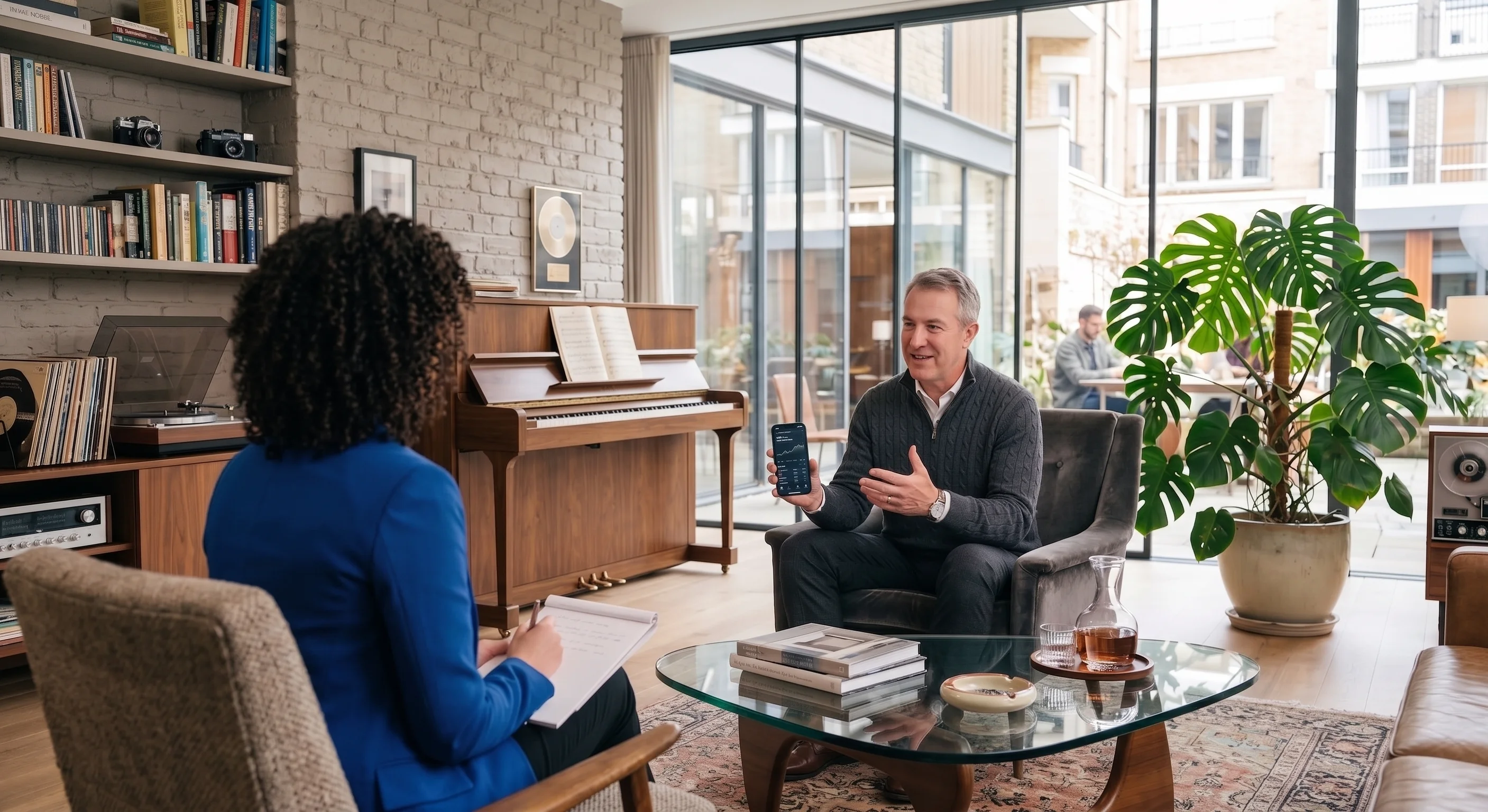
Brian is a teacher and professional keyboardist from the northwest of England. He opened his ANote Music account in June 2025, which makes him one of the newer voices we've spoken to on the blog. At first, he wasn't sure a little over a year gave him enough to talk about. We think it does. Most people buying their first shares today are in the same position, and Brian's view is a useful one: he's early in the journey, but he's clear that he's in it for the long term.
Table of contents:
- From earning royalties to buying them
- Why music royalties and why ANote Music
- A year later: the strategy and the experience
- A word for newcomers
- Looking ahead
From earning royalties to buying them
Brian knew music royalties from the artist side long before he found ANote Music. "I've been a teacher all my life," he says, "and I'm also a professional musician." He has albums and tracks out through a distributor, and he receives royalties from the Performing Right Society (PRS) and the Mechanical-Copyright Protection Society (MCPS), the UK organisations that collect royalties for songwriters and composers when their tracks are used or broadcast. If you're less familiar with how this works, our article on what music royalties are and why they matter covers the basics.
What he hadn't done was put money into music as an asset class. That came through his son, who had been using ANote Music for some time. Brian is careful to say his son didn't push him into it. It was seeing his son's experience that encouraged him. His son was also clear about the risk. It was Brian's decision to make, and as with anything of this kind, prices can go up as well as down. "You just have to know what you're doing." his son told him beforehand.
Why music royalties and why ANote Music
For Brian, part of the appeal is who the catalogues belong to. His son described ANote Music to him as a platform that can help musicians around the world, and that stuck. "I noticed that there are some big names in there as well," he says. "But there's a lot of people that aren't recognised, and if it's helping them, it's a good thing."
Behind most songs, there are more people than the artist whose name we know. Songwriters, producers and others hold rights in the music and earn royalties from it too.
When he explains it to others, Brian puts it simply: he's using a music platform that "at the same time is helping other people and potentially makes me a profit."
His first purchase was around €1,000, an amount he chose to test the idea for himself.
"I just thought I would dip my toe in the water, and it went from there."
He has added more since. His first impression of the platform was that it was interesting and "pretty well organised". He had one or two login issues early on, which were resolved, and since then, he says, "I haven't had any problems at all."
A year later: the strategy and the experience
Brian doesn't follow a fixed buying strategy. He doesn't choose catalogues by genre, for instance. "That isn't what ANote is all about to me," he says. Instead, he looks at a catalogue's historical return and considers buying if he thinks it's a good one. He hasn't sold any shares so far, and he buys when he has money to spare. Right now, that means a pause: "I've just had a very expensive summer holiday."
What he does have is a clear approach, and it's about time.
"As far as I'm concerned, investing in ANote Music is a long-term strategy."
"I've only been in it for a year," he adds, "and you've got to give it time to show me how it can perform." He sees it the same way as the stock market. "You've got to be in it for the long term. You've got to be aware that they can go down as well as up, and be prepared for those troughs as well as the peaks."
He's clear about the main risk too. "It's the same with any investment. It's the volatility, and the fact that markets can go up and they can go down."
He also holds more traditional assets, and the difference he notices most is control.
"I feel with ANote Music that I'm a little bit more in control of what I can do."
"With other investments, you're in the hands of agents that you don't know from Adam," he says. For him, that makes it "more of a personal thing", which he sees as quite an advantage.
He visits the platform once or twice a week, rarely for more than an hour. What he finds most useful is being able to look at a specific catalogue, see how it has performed over time, and keep track of his own portfolio. He also values being able to reach the team.
"If I do have any questions, it's quite easy to ask them. You get a good response, the response comes quickly, and I think that's important."
Music royalties themselves aren't new. What's still relatively new is the idea of buying a share of them as an asset class, so it's natural for some people to have doubts. Brian has seen this at home. "I've tried to explain it to my wife, and she has expressed some scepticism," he says. His answer is that the decision is his own: "It's my risk. I'm not risking any of her worldly wealth."
When asked what could be better, he couldn't point to anything on the site itself. The recent redesign has taken some adjusting to. "I got used to the old one and then you changed it," he says. "It's an ongoing learning process." One thing he would find useful is more information on royalties. Our monthly royalty update articles now bring each month's payouts together in one place, including which distributors paid and for which period.
A word for newcomers
For someone who's curious but hasn't started, Brian's first suggestion is to "go onto the website and have a good look at what it's got to offer." After that, make sure you're comfortable with what you're planning, and "have a set figure to start with and see how it goes, and then take it from there."
Looking ahead
Asked where he sees his portfolio in five years, Brian answered with a question of his own: "How long is a piece of string?" In other words, there's no way to know. For now, though, he knows where he stands.
"At the moment, I'm pretty happy with it."
He also thinks the platform's own progress matters for whether more people take an interest. "As long as we see ANote Music continuing to develop, I think that would be encouraging for people to look at it." In the meantime, he's "watching this space".
Brian's story sits alongside that of Jean-Denis, who joined in the platform's early years, and Bruno, who has been with us for two years. Together, they show what the experience looks like at different points along the way.
Discover the marketplace where Brian started, and explore the catalogues for yourself:
This article is for general information and educational purposes only and is not financial or investment advice, a recommendation, or a solicitation to buy, sell, or hold any royalty interest or intellectual property right, nor does it consider any individual's circumstances or risk profile. Royalty income is variable and not guaranteed, the value of royalty interests can rise or fall, and you may lose some or all of the amount committed; where a secondary market exists, you may not be able to sell immediately or at a particular price. Any historical figures, index data, or market behaviour referred to are for information only and do not guarantee future results, liquidity, or protection from losses.
Related posts
.webp)

September 11, 2026
12 min read


